Planting onions in Zone 6 requires attention to timing and conditions for optimal growth. Onions can be grown from seeds, sets, or transplants, and knowing when to plant is crucial for a successful harvest.
In Zone 6, the ideal time to plant onions is in early spring, typically around mid-March to early April, once the soil has warmed to at least 50°F (10°C).
Creating the Perfect Garden Bed
Establishing a vibrant garden bed begins with selecting the right location. A sunny spot is essential, as onions thrive in full sunlight. Aim for an area that receives at least six hours of direct sunlight each day.
Before planting, prepare the soil by tilling it to a depth of at least 12 inches. This process aerates the soil and improves drainage, which is vital for healthy onion growth. Mixing in organic matter, such as compost or well-rotted manure, enhances soil fertility and structure.
Choosing the Right Onion Varieties
When it comes to onions, variety matters. In Zone 6, consider planting yellow, red, or white onions, each offering unique flavors and uses in the kitchen. Selecting varieties suited for your region ensures a better chance of success.
Onions can be grown from seeds, sets, or transplants. Seeds require more time and care, while sets are easier for beginners. Choose based on your gardening experience and the time you have available.
Planting Techniques for Success
Timing is crucial for planting onions in Zone 6. The ideal window is from mid-March to early April, once the soil temperature reaches at least 50°F (10°C).
When planting, sow seeds or sets about 1 inch deep and space them approximately 4 inches apart in rows that are 12 inches apart. This spacing allows for proper air circulation and growth.
Watering and Maintenance
Consistent moisture is key during the initial growth phase. Water the onions regularly, ensuring the soil remains moist but not waterlogged. This balance helps prevent rot and encourages strong root development.
As the onions grow, consider applying a balanced fertilizer according to package instructions. This additional nutrition supports healthy development and can lead to a more abundant harvest.
Harvesting Your Onions
Patience is essential when growing onions. They typically take between 90 to 120 days to mature. Watch for signs that they are ready to harvest: the tops will begin to fall over and dry out, usually in late summer.
Once harvested, onions can be stored in a cool, dry place. Proper storage extends their shelf life, allowing you to enjoy your homegrown onions for months to come.
Creating a Nurturing Environment
Surrounding your garden bed with tools like a watering can and gardening implements not only enhances the aesthetic but also signifies a commitment to nurturing your plants. Keeping your gardening area organized and accessible makes the process enjoyable.
With the right preparation and care, your garden bed will flourish, providing fresh, healthy onions that can be enjoyed in a variety of dishes. Embrace the joy of gardening and the satisfaction of growing your own food!
Timing and Tips for Planting Onions
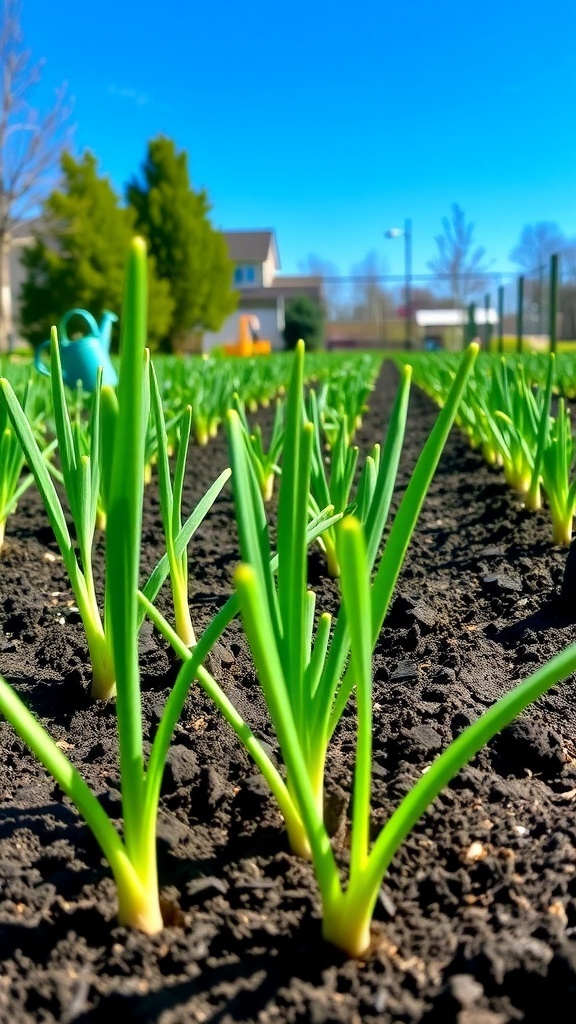
Onions thrive in full sun and well-drained soil. It’s important to prepare the soil by tilling and adding organic matter before planting. Depending on the variety, onions can take anywhere from 90 to 120 days to mature.
Ingredients
- Onion seeds or sets
- Well-drained soil
- Organic matter (compost or well-rotted manure)
- Mulch (optional)
Instructions
- Prepare the Soil: Till the soil to a depth of at least 12 inches and mix in organic matter to improve drainage and fertility.
- Choose Your Onions: Select onion varieties suited for your region, such as yellow, red, or white onions.
- Planting: Sow seeds or sets about 1 inch deep and 4 inches apart in rows spaced 12 inches apart.
- Watering: Keep the soil consistently moist but not waterlogged, especially during the initial growth phase.
- Fertilization: Apply a balanced fertilizer according to package instructions as the onions grow.
- Harvesting: Onions are ready to harvest when the tops begin to fall over and dry out, usually in late summer.
Cook and Prep Times
- Prep Time: 15 minutes
- Planting Time: March to April
- Growing Time: 90 to 120 days
- Calories: 40 kcal per 100g
- Carbohydrates: 9g
- Protein: 1g
- Fat: 0g