Tilapia pond fish farming is a sustainable aquaculture practice that allows for the efficient production of tilapia, a popular freshwater fish known for its mild flavor and versatility in cooking. This guide provides essential information for successfully raising tilapia in a pond environment.
The process involves selecting the right pond site, managing water quality, feeding, and ensuring proper health management of the fish. With the right techniques, tilapia farming can be a profitable venture.
Creating the Ideal Tilapia Pond Environment
Establishing a successful tilapia pond begins with selecting the right location.
The site should have access to clean water and ample sunlight, while also being shielded from pollution.
Choosing a spot with natural vegetation can help maintain the ecosystem and provide shade for the fish.
Once the site is chosen, proper pond preparation is essential.
This includes ensuring the pond has the right depth and size to support healthy fish growth.
A well-constructed pond will facilitate water circulation and oxygenation, promoting a thriving aquatic environment.
Stocking Your Pond with Tilapia Fingerlings
After preparing the pond, the next step is to introduce tilapia fingerlings.
It’s important to follow recommended stocking densities based on the pond’s size to avoid overcrowding.
Overstocking can lead to competition for resources and increased stress among the fish.
Monitoring the fingerlings’ adaptation to their new environment is crucial.
Observing their behavior and growth can provide insights into the health of the pond and the effectiveness of management practices.
Feeding Strategies for Healthy Growth
Providing a balanced diet is vital for tilapia growth and overall health.
Quality fish feed should be used, and the quantity adjusted according to the fish’s growth stage.
Regular feeding schedules can help ensure that the fish receive adequate nutrition.
It’s beneficial to observe the fish during feeding times.
This can help assess their appetite and adjust feeding strategies accordingly, promoting optimal growth rates.
Maintaining Water Quality
Water quality is a key factor in successful tilapia farming.
Regular testing of parameters such as pH, dissolved oxygen, and ammonia levels is necessary to maintain a healthy environment.
Any fluctuations in these parameters can impact fish health and growth.
Implementing an aeration system may be necessary, especially in warmer months, to ensure sufficient oxygen levels.
Maintaining clean water not only supports fish health but also contributes to the overall sustainability of the aquaculture system.
Health Management and Disease Prevention
Monitoring fish health is essential for preventing disease outbreaks.
Farmers should regularly observe the fish for any signs of illness or stress.
Implementing good management practices can significantly reduce the risk of disease.
Having health management supplies on hand can facilitate quick responses to any issues that arise.
This proactive approach can help maintain a healthy fish population and ensure a successful harvest.
Harvesting Your Tilapia
Harvesting is the final step in the tilapia farming process.
Typically, tilapia reach market size in about 6 to 8 months, depending on growth conditions.
Monitoring their growth during this period can help determine the right time for harvesting.
Careful planning for the harvest can maximize yield and ensure that the fish are in optimal condition for sale or consumption.
A well-timed harvest not only benefits the farmer but also contributes to food security in the community.
Essential Practices for Tilapia Pond Farming
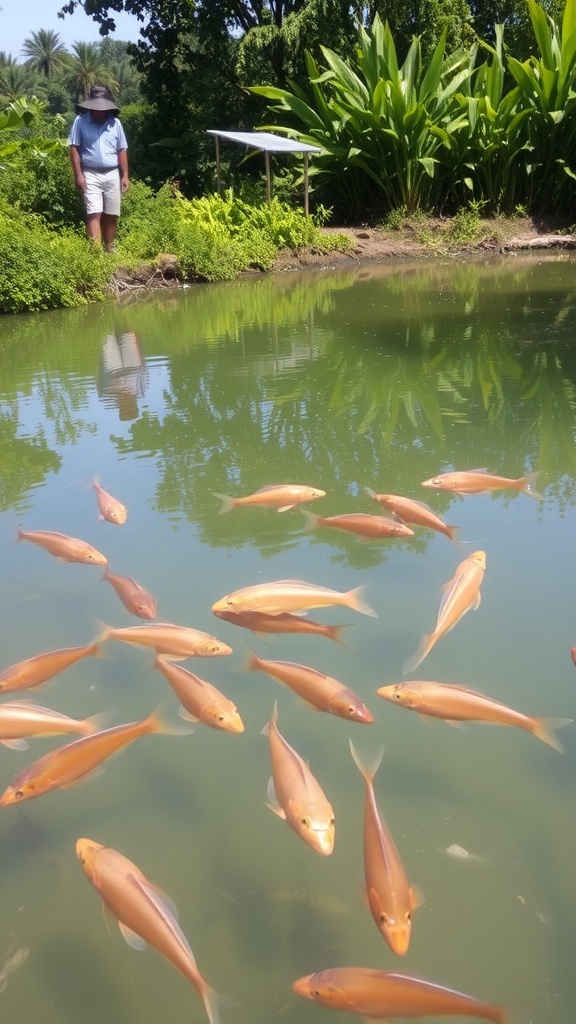
This guide covers the fundamental aspects of tilapia pond fish farming, including pond preparation, stocking density, feeding strategies, and disease management. Successful tilapia farming can yield high returns and contribute to food security.
Ingredients
- Pond site with suitable water source
- Tilapia fingerlings
- Quality fish feed
- Water quality testing kits
- Aeration system (if necessary)
- Fish health management supplies
Instructions
- Select a Suitable Site: Choose a location with access to clean water, adequate sunlight, and minimal pollution.
- Prepare the Pond: Ensure the pond is properly constructed, with appropriate depth and size for tilapia farming.
- Stocking: Introduce tilapia fingerlings into the pond at the recommended stocking density based on pond size.
- Feeding: Provide a balanced diet using quality fish feed, adjusting the quantity based on the fish’s growth stage.
- Monitor Water Quality: Regularly test water parameters such as pH, dissolved oxygen, and ammonia levels to maintain a healthy environment.
- Health Management: Observe fish for signs of disease and implement management practices to prevent outbreaks.
- Harvesting: Harvest tilapia when they reach market size, typically between 6-8 months, depending on growth conditions.
Cook and Prep Times
- Prep Time: 1-2 weeks for pond preparation
- Growing Time: 6-8 months for tilapia to reach market size
- Total Time: Varies based on farming cycle
- Servings: Varies based on harvest
- Calories: Varies based on preparation method
- Fat: Varies
- Protein: Varies
- Carbohydrates: N/A