This guide provides essential information for establishing and managing a tilapia hatchery. Tilapia is a popular fish species for aquaculture due to its fast growth, adaptability, and high market demand.
Understanding the breeding, rearing, and management practices is crucial for successful tilapia production. This guide covers the key aspects of hatchery operations, including water quality, breeding techniques, and fry management.
Understanding Tilapia Hatchery Operations
Establishing a tilapia hatchery involves a series of carefully orchestrated steps that ensure the successful breeding and nurturing of tilapia fry.
Key to this process is the selection of healthy broodstock, which consists of mature male and female tilapia.
Maintaining optimal conditions in the hatchery environment is essential for spawning and fry development.
Monitoring water quality, temperature, and pH levels plays a significant role in the health and growth of the fish.
Water Quality Management
Water quality is a critical factor in the success of a tilapia hatchery.
Regular testing of water parameters such as ammonia, nitrite, nitrate, and pH is necessary to ensure a healthy environment for the fry.
Implementing an effective aeration system helps maintain oxygen levels, which is vital for the survival of the fry.
Additionally, proper filtration systems should be in place to keep the water clean and free from harmful substances.
Feeding Practices for Fry
Feeding tilapia fry requires a well-planned regimen to promote healthy growth.
Providing high-quality feed that meets the nutritional needs of the fry is essential.
Frequent feeding throughout the day ensures that the fry receive adequate nutrition for optimal development.
Monitoring the fry’s growth and adjusting feeding practices accordingly can lead to better outcomes in their overall health.
Breeding Techniques
Inducing spawning in tilapia can be achieved through various methods, including hormonal treatments.
Once spawning occurs, it is crucial to collect the fertilized eggs promptly and place them in hatching tanks.
Proper aeration and water flow in the hatching tanks are vital for the successful hatching of the eggs.
Close monitoring during this stage ensures that the eggs develop into healthy fry.
Fry Rearing and Transfer
After hatching, the fry require specific care to thrive.
Maintaining optimal water conditions and providing appropriate feed are key components of fry rearing.
Once the fry reach a suitable size, they can be transferred to larger rearing tanks or ponds for further growth.
This transition is crucial for their development and prepares them for future stocking in grow-out systems.
Biosecurity Measures in Hatchery Management
Implementing biosecurity measures is essential to prevent disease outbreaks in a tilapia hatchery.
Regular cleaning and disinfection of equipment, tanks, and surrounding areas help maintain a healthy environment.
Monitoring the health of the fish and isolating any affected individuals can mitigate the spread of diseases.
Establishing strict protocols for new stock introductions is also vital for maintaining the overall health of the hatchery.
Comprehensive Tilapia Hatchery Practices
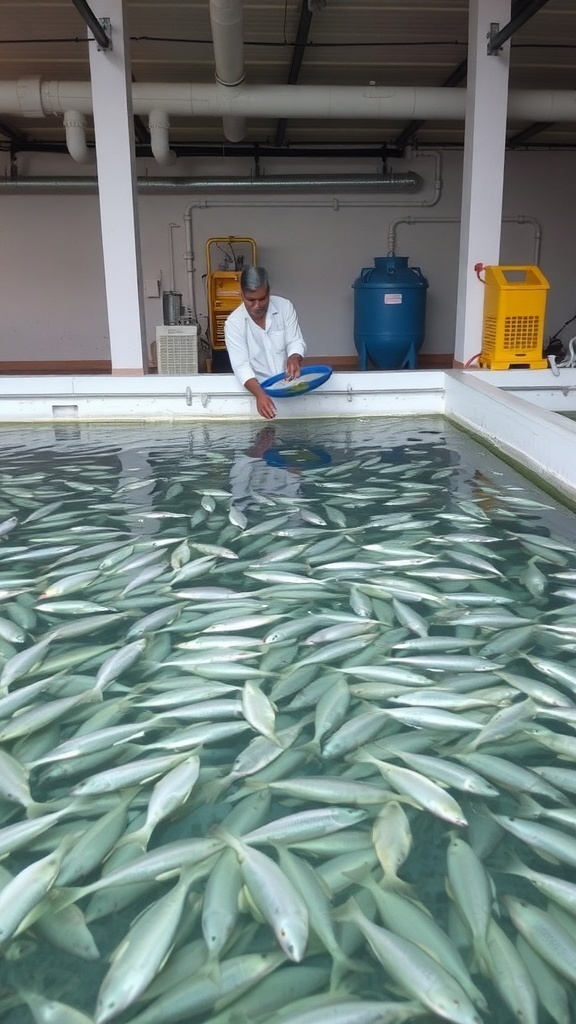
A tilapia hatchery involves breeding tilapia fish to produce fry for aquaculture. Successful hatchery operations require careful monitoring of water quality, temperature, and breeding conditions. The process typically includes selecting broodstock, spawning, and nurturing the fry until they are ready for stocking in grow-out systems.
Ingredients
- Broodstock tilapia (male and female)
- Hatching tanks or ponds
- Aeration system
- Water quality testing kits
- Feeding regimen for fry
- Fry rearing tanks or ponds
- Biosecurity measures
Instructions
- Select Healthy Broodstock: Choose mature tilapia that are healthy and free from diseases. A good ratio is one male for every three females.
- Prepare Hatching Environment: Set up hatching tanks or ponds with appropriate aeration and water quality. Maintain optimal temperature and pH levels.
- Induce Spawning: Use hormonal treatments if necessary to stimulate spawning. Monitor the breeding process closely.
- Collect Eggs: After spawning, collect the fertilized eggs and place them in hatching tanks. Ensure proper aeration and water flow.
- Nurture Fry: Once the fry hatch, provide appropriate feed and maintain optimal water conditions. Monitor growth and health regularly.
- Transfer to Rearing Tanks: Once the fry reach a suitable size, transfer them to larger rearing tanks or ponds for further growth.
Cook and Prep Times
- Prep Time: 1 week for setup
- Hatching Time: 3-5 days for eggs
- Fry Rearing Time: 4-6 weeks until transfer
- Servings: N/A
- Calories: N/A
- Fat: N/A
- Protein: N/A
- Carbohydrates: N/A