Proper onion storage is essential for maintaining freshness and flavor. Onions can be kept for several weeks or even months if stored correctly, preventing spoilage and waste.
This guide provides practical tips on how to store onions effectively, whether you have whole onions, cut onions, or onion powder.
Creating an Ideal Storage Environment
Establishing a proper storage area for onions is key to preserving their freshness and flavor. A cool, dark pantry is perfect for this purpose, as it protects onions from light and heat, which can accelerate spoilage.
Wooden shelves not only provide a rustic charm but also help maintain a stable temperature. Avoid placing onions near heat sources or in direct sunlight, as this can lead to sprouting and decay.
Choosing the Right Storage Containers
When it comes to storing whole onions, mesh bags or baskets are excellent choices. These options allow for air circulation, which is essential for preventing moisture buildup that can lead to mold.
For cut onions, airtight containers are necessary to keep them fresh. Make sure to seal them tightly to avoid any odors from spreading in your refrigerator.
Maintaining Proper Ventilation
Ventilation plays a significant role in onion storage. Whole onions should never be sealed in plastic bags, as this traps moisture and creates an environment conducive to spoilage.
Using breathable materials like mesh or wicker allows onions to “breathe,” helping to maintain their quality over time. Regularly check the storage area to ensure proper airflow.
Regular Inspection for Quality Control
It’s important to routinely inspect your stored onions for any signs of spoilage. Look for soft spots, discoloration, or sprouting, and remove any affected onions immediately to prevent them from affecting the others.
By keeping an eye on your onions, you can ensure that they remain fresh and usable for an extended period. This simple practice can save you from unnecessary waste.
Understanding Different Onion Varieties
Storing various types of onions, such as yellow, red, and green, can enhance your culinary experiences. Each type has its unique flavor profile and storage needs, but the general principles remain the same.
Yellow onions are versatile and can be stored for several months, while red onions are best used within a few weeks for optimal flavor. Green onions, on the other hand, should be kept in the refrigerator, ideally in a glass of water, to maintain their crispness.
Maximizing Longevity with Proper Techniques
To maximize the shelf life of your onions, always keep them in a cool, dry place. The right storage techniques can extend their usability, allowing you to enjoy their flavors in various dishes.
By implementing these practices, you can ensure that your onions remain fresh and flavorful, ready to enhance your meals whenever needed.
Best Practices for Storing Onions
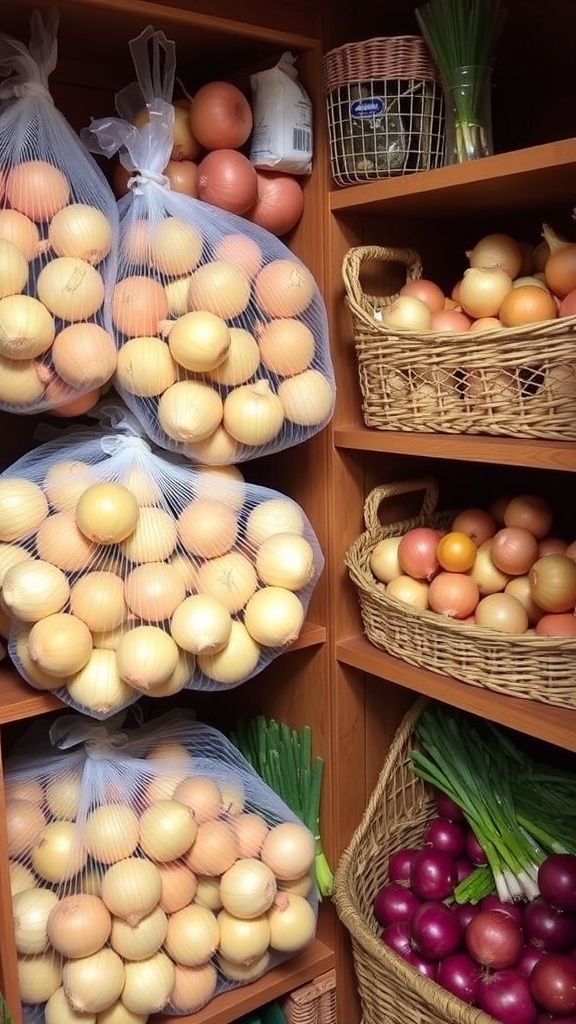
Onions should be stored in a cool, dry, and well-ventilated area. Whole onions can be kept in mesh bags or baskets to allow air circulation, while cut onions should be placed in airtight containers in the refrigerator. Proper storage helps to prolong their shelf life and maintain their quality.
Ingredients
Instructions
- Choose the Right Storage Method: For whole onions, opt for a mesh bag or basket. For cut onions, use an airtight container.
- Keep Them Cool: Store onions in a cool, dark place away from direct sunlight.
- Ensure Ventilation: Avoid sealing whole onions in plastic bags to prevent moisture buildup.
- Check Regularly: Inspect stored onions for any signs of spoilage and remove any affected ones immediately.
Cook and Prep Times
- Prep Time: N/A
- Cook Time: N/A
- Total Time: N/A
- Servings: N/A
- Calories: N/A
- Fat: N/A
- Protein: N/A
- Carbohydrates: N/A