Observing an onion under a microscope reveals fascinating details about its cellular structure. The onion’s cells are large and easily visible, making it an excellent specimen for studying plant cell anatomy.
This observation can help you understand the basic components of plant cells, including the cell wall, cytoplasm, and nucleus.
Microscopic Examination of Onion Cells
Observing onion cells under a microscope reveals intriguing details about their structure. The cells are notably rectangular, showcasing distinct cell walls that define their shape.
Each cell is filled with a clear cytoplasm, which allows for the visibility of the nucleus. This prominent feature appears as a darker spot within the cell, making it easier to identify and study.
Preparing the Onion Sample
To begin your examination, prepare the onion by cutting a small piece and peeling off the outer layers. This exposes the inner flesh, which is crucial for obtaining a clear sample.
Using a scalpel, carefully slice a thin layer of the onion. The thickness should be just right to allow light to pass through, ensuring optimal visibility under the microscope.
Mounting and Observing the Sample
Once you have your thin onion slice, place it on a glass slide. Adding a drop of water helps keep the sample hydrated, which is important for maintaining cell structure during observation.
Gently cover the sample with a cover slip. Take care to avoid air bubbles, as these can obstruct your view of the cells.
Examining Under the Microscope
Start your examination with the lowest magnification setting on your microscope. This allows you to locate the onion cells easily.
Once you have found the cells, gradually increase the magnification for a more detailed observation. This will enhance your understanding of the cellular structure and the arrangement of the cells.
Understanding Plant Cell Anatomy
The study of onion cells provides valuable insights into plant cell anatomy. The clear distinction of cell walls, cytoplasm, and nuclei helps illustrate the fundamental components of plant cells.
Such observations can deepen your appreciation for plant biology and the complexity of cellular structures. Each component plays a vital role in the overall function of the plant.
Conclusion of the Observation Process
After completing your examination, take a moment to reflect on the details you observed. The clarity and organization of the onion cells highlight the beauty of microscopic life.
This simple experiment not only enhances your knowledge of biology but also encourages curiosity about the natural world around us. Each observation can lead to new questions and discoveries in the field of science.
Microscopic Examination of Onion Cells
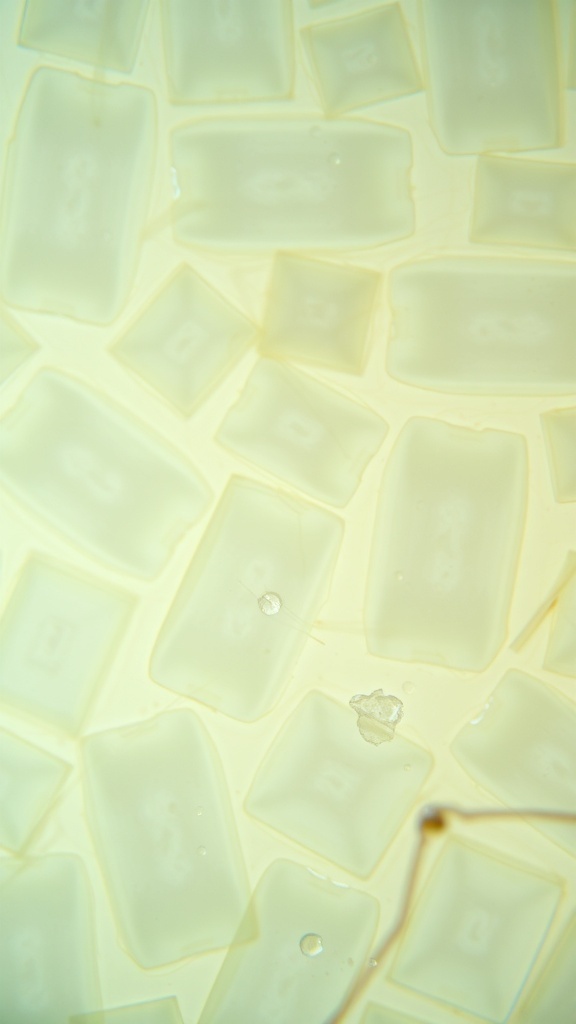
When viewed under a microscope, onion cells appear as rectangular shapes with distinct cell walls. The cells are filled with a clear cytoplasm and contain a prominent nucleus, which can be identified as a darker spot within each cell.
Ingredients
- 1 onion
- Microscope
- Glass slides
- Cover slips
- Scalpel or knife
- Tweezers
- Water
Instructions
- Prepare the Onion: Cut a small piece of the onion and peel off the outer layers to expose the inner flesh.
- Obtain a Sample: Use a scalpel to carefully slice a thin layer of the onion. Aim for a thickness that allows light to pass through easily.
- Mount the Sample: Place the thin onion slice on a glass slide. Add a drop of water to keep the sample hydrated.
- Cover the Sample: Gently place a cover slip over the onion slice to avoid air bubbles.
- Examine Under Microscope: Start with the lowest magnification to locate the onion cells, then gradually increase the magnification for detailed observation.
Cook and Prep Times
- Prep Time: 5 minutes
- Observation Time: 10-15 minutes
- Total Time: 20 minutes
- Servings: 1 observation
- Calories: N/A
- Fat: N/A
- Protein: N/A
- Carbohydrates: N/A