This article explores the fascinating structure of onion cells as viewed under a microscope. Onions are a common plant used in biology classes to study cell structure due to their large, easily observable cells.
The onion’s cell walls, cytoplasm, and nuclei are clearly visible, making it an excellent specimen for understanding basic plant cell anatomy.
Microscopic View of Onion Cells
Onion cells are remarkable for their rectangular shape, making them easily identifiable under a microscope. This characteristic shape allows for a clear view of the various components that make up the cell structure.
When examined closely, the thin cell walls become apparent, appearing as delicate lines that define the boundaries of each cell. These walls provide structural support while allowing for the movement of substances in and out of the cell.
Cellular Components
Within the onion cell, the granular cytoplasm is a notable feature. This semi-fluid substance fills the interior of the cell and contains various organelles essential for cellular function.
The granular texture of the cytoplasm can be attributed to the presence of ribosomes and other cellular components, which play crucial roles in protein synthesis and metabolic processes.
The Central Vacuole
One of the most striking features of the onion cell is the large central vacuole. This organelle occupies a significant portion of the cell’s interior and serves multiple functions.
The central vacuole is primarily responsible for storing nutrients, waste products, and maintaining turgor pressure, which helps keep the plant cell rigid and supports its structure.
The Nucleus
Located within the cytoplasm, the nucleus is another key component of the onion cell. This organelle houses the cell’s genetic material and is crucial for regulating cellular activities.
In a microscopic view, the nucleus can be observed as a distinct structure, often appearing darker than the surrounding cytoplasm due to its dense chromatin. This visibility aids in understanding the role of the nucleus in cell function.
Educational Importance
Studying onion cells under a microscope provides valuable insights into plant cell anatomy. The clear visibility of cell walls, cytoplasm, vacuole, and nucleus allows students to grasp fundamental concepts in biology.
These observations serve as a foundation for understanding more complex biological processes and the overall functioning of plant cells.
Conclusion
The microscopic examination of onion cells reveals a wealth of information about plant cell structure. From the rectangular shape to the prominent central vacuole and nucleus, each component plays a vital role in the life of the cell.
Such studies not only enhance our knowledge of biology but also foster a deeper appreciation for the intricate designs found in nature.
Microscopic View of Onion Cells
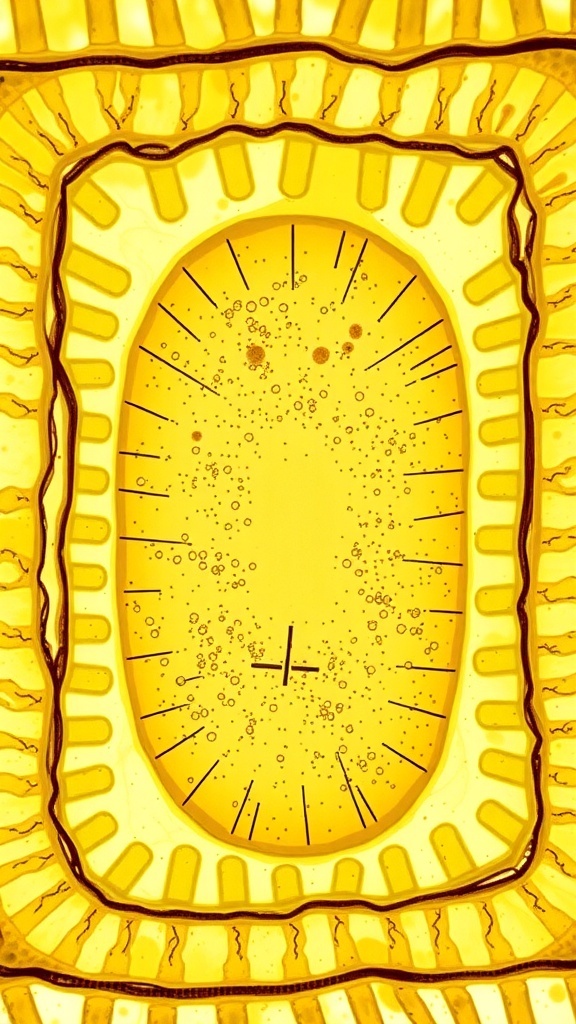
Onion cells are characterized by their rectangular shape and distinct layers. When observed under a microscope, the cell walls appear as thin lines, while the cytoplasm shows a granular texture. The large central vacuole is prominent, and the nucleus can be seen within the cytoplasm.