Onions are a staple ingredient in many cuisines around the world, known for their distinct flavors and versatility. Different onion varieties offer unique tastes, colors, and textures, making them suitable for various culinary applications.
This guide covers some of the most popular onion varieties, including their characteristics, uses, and how to select and store them.
Exploring Onion Varieties
Onions are a fundamental ingredient in kitchens worldwide, celebrated for their distinct flavors and adaptability.
Each variety brings its own unique taste, color, and texture, making them suitable for a range of culinary uses.
From salads to hearty stews, onions play a crucial role in enhancing the overall flavor profile of dishes.
Common Onion Varieties
This section highlights several popular onion types: yellow, red, white, green, and shallots.
Each variety possesses its own flavor characteristics, making them ideal for specific culinary applications.
Understanding these differences can help in selecting the right onion for your dish.
Yellow Onions
Yellow onions are the most widely used variety, known for their robust flavor and versatility.
They are perfect for caramelizing, sautéing, and adding depth to soups and stews.
Their strong taste mellows when cooked, making them a staple in many recipes.
Red Onions
Red onions stand out with their vibrant purple skin and milder flavor.
They are often enjoyed raw in salads, salsas, and sandwiches, where their color and crunch can shine.
Grilling or roasting red onions can also enhance their sweetness, making them a delightful addition to various dishes.
White Onions
White onions offer a sharper taste compared to their yellow counterparts.
They are commonly used in Mexican cuisine, adding a crisp bite to tacos, salsas, and guacamole.
Their clean flavor makes them a great choice for dishes that require a more pronounced onion taste.
Green Onions
Also known as scallions, green onions have a mild flavor and are often used as a garnish.
Their fresh, crisp texture adds a pop of color to salads and dishes.
Both the green tops and white bulbs are edible, making them a versatile ingredient in many recipes.
Shallots
Shallots are a milder, sweeter variety of onion, perfect for dressings and sauces.
Their delicate flavor pairs well with vinaigrettes and can elevate the taste of gourmet dishes.
Shallots are often used in French cuisine, where their subtle sweetness can enhance the overall dish.
Selecting and Storing Onions
When choosing onions, look for firm specimens without soft spots or blemishes.
The skin should feel dry and papery, indicating freshness.
For storage, keep onions in a cool, dry, and well-ventilated area, avoiding plastic bags to prevent moisture buildup.
Using Onions in Cooking
Onions can be used in various ways depending on the variety.
They can be eaten raw in salads, sautéed for flavor, or caramelized to bring out their natural sweetness.
Experimenting with different onion types can enhance your dishes and add depth to your culinary creations.
Common Onion Varieties
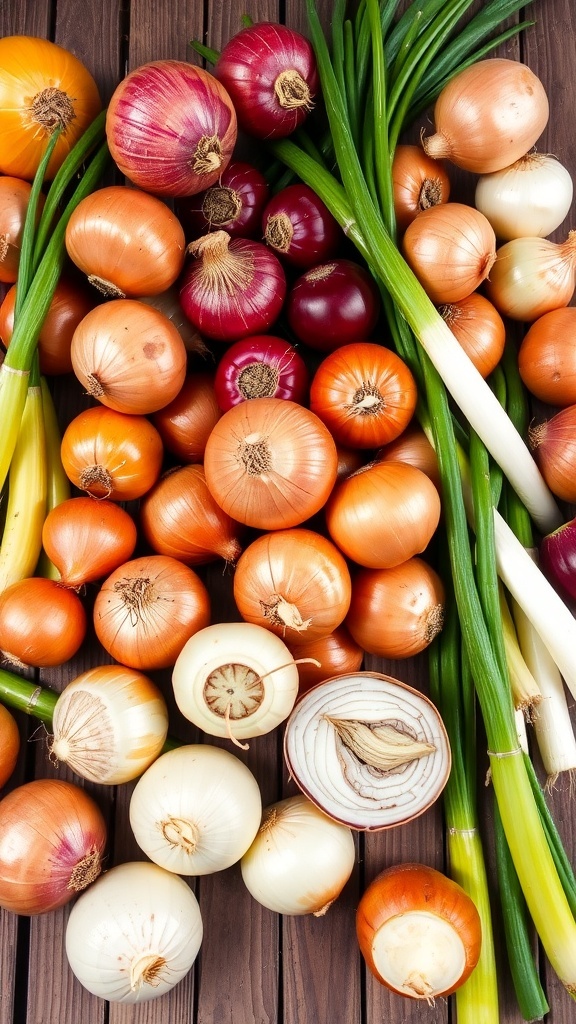
This overview includes yellow onions, red onions, white onions, green onions, and shallots. Each variety has its own flavor profile and best uses, from raw salads to caramelized dishes.
Ingredients
- Yellow Onions: The most common variety, known for its strong flavor and versatility in cooking.
- Red Onions: Characterized by their purple skin and mild flavor, often used in salads and salsas.
- White Onions: Have a sharper taste compared to yellow onions, commonly used in Mexican cuisine.
- Green Onions: Also known as scallions, these have a mild flavor and are often used as a garnish or in salads.
- Shallots: A milder, sweeter variety that is great for dressings and sauces.
Instructions
- Selecting Onions: Choose firm onions with no soft spots or blemishes. The skin should be dry and papery.
- Storing Onions: Keep onions in a cool, dry, and well-ventilated place. Avoid storing them in plastic bags to prevent moisture buildup.
- Using Onions: Depending on the variety, use raw in salads, sautéed in dishes, or caramelized for added sweetness.
Cook and Prep Times
- Prep Time: 5 minutes
- Cook Time: Varies by recipe
- Total Time: Varies by recipe
- Servings: Varies by use
- Calories: Approximately 40 calories per 100g
- Fat: 0g
- Protein: 1g
- Carbohydrates: 9g