Planting onions in Zone 8 can yield a bountiful harvest with the right techniques and timing. This region offers a favorable climate for growing both spring and fall onion varieties, making it essential to understand the best practices for successful cultivation.
This guide will cover the optimal planting times, types of onions suitable for Zone 8, and tips for care to ensure healthy growth.
Understanding the Ideal Conditions for Onions
Onions thrive in well-draining soil enriched with organic matter. This is particularly important in Zone 8, where the climate supports both spring and fall planting. The soil should be dark and rich, providing the necessary nutrients for healthy growth.
Choosing the right location is essential. Onions require full sun, so select a spot that receives at least six hours of sunlight each day. This exposure helps the plants develop robust green tops and bulbous bases.
Choosing the Right Onion Varieties
In Zone 8, gardeners can opt for various onion types, including yellow, red, and white onions. Each variety has its unique flavor profile and culinary uses, making it fun to experiment with different types in your garden.
When selecting onion sets or seeds, consider your personal taste preferences and the intended use in your kitchen. This choice will influence your planting strategy and care techniques.
Planting Techniques for Success
Timing is crucial for planting onions. In Zone 8, early spring or late summer are the prime times for planting. For onion sets, bury them 1-2 inches deep and space them 4-6 inches apart. If using seeds, sow them about 1/4 inch deep in rows that are 12 inches apart.
Proper soil preparation is vital. Amend the soil with organic matter to enhance drainage and fertility, ensuring that the onions have the best start possible. This preparation sets the stage for a thriving garden bed.
Watering and Fertilization Practices
Consistent moisture is key for onion growth. Water the plants deeply once a week, adjusting based on rainfall. The goal is to keep the soil moist but not soggy, as overwatering can lead to rot.
Fertilization should occur every 4-6 weeks during the growing season. A balanced NPK fertilizer is recommended to support healthy growth and development. This practice will help the onions reach their full potential.
Weed Control and Maintenance
Weeds can compete with onions for nutrients and water, so regular monitoring is necessary. Check your garden bed frequently and remove any weeds that appear, especially around the edges where they may thrive.
Maintaining a clean garden bed not only promotes healthy onion growth but also makes harvesting easier when the time comes. A tidy space allows for better air circulation and reduces the risk of disease.
Harvesting Your Onions
Knowing when to harvest onions is crucial for a successful yield. Onions are ready to be pulled from the soil when the tops begin to fall over and dry out. This indicates that the bulbs have reached maturity.
Once harvested, allow the onions to cure in a dry, shaded area. This process helps to enhance their flavor and extend their shelf life, making them a valuable addition to your kitchen for months to come.
Onion Planting Tips for Zone 8
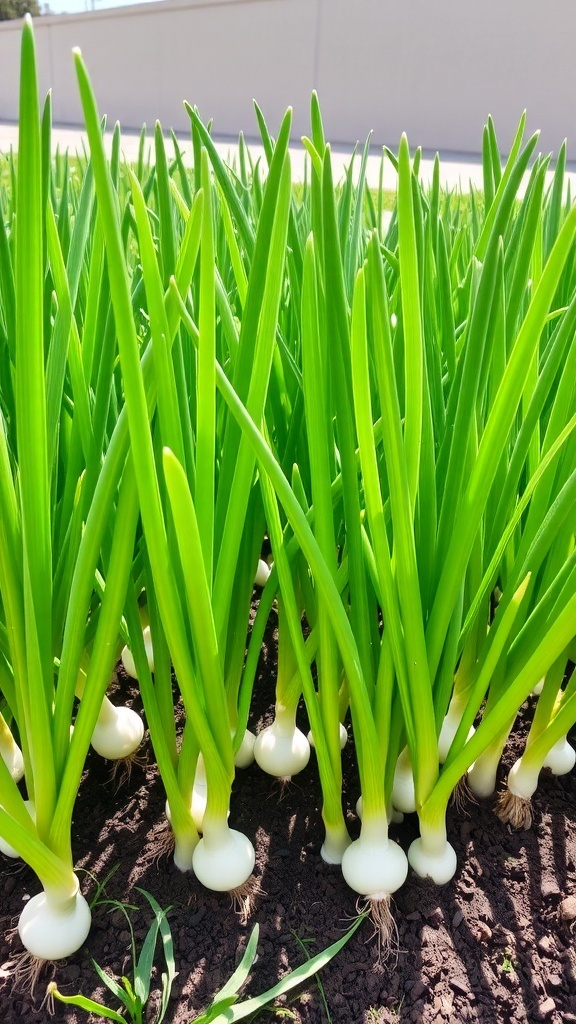
In Zone 8, onions can be planted in early spring or late summer for a fall harvest. Choose from varieties like yellow, red, or white onions. Proper soil preparation, adequate watering, and pest management are key factors for a thriving onion crop.
Ingredients
- Onion sets or seeds (yellow, red, or white varieties)
- Well-draining soil with good organic matter
- Fertilizer (balanced NPK recommended)
- Mulch (optional for moisture retention)
- Watering can or hose
Instructions
- Prepare the Soil: Choose a sunny location and amend the soil with organic matter to improve drainage and fertility.
- Planting: For onion sets, plant them 1-2 inches deep and 4-6 inches apart. If using seeds, sow them about 1/4 inch deep in rows spaced 12 inches apart.
- Watering: Keep the soil consistently moist but not waterlogged. Water deeply once a week, adjusting based on rainfall.
- Fertilization: Apply a balanced fertilizer according to package instructions, typically every 4-6 weeks during the growing season.
- Weed Control: Regularly check for weeds and remove them to reduce competition for nutrients and water.
- Harvesting: Onions are ready to harvest when the tops begin to fall over and dry out. Gently lift them from the soil and allow them to cure in a dry, shaded area.
Cook and Prep Times
- Prep Time: 15 minutes
- Planting Time: 1-2 hours
- Growing Time: 90-120 days until harvest
- Calories: 40 kcal per 100g
- Carbohydrates: 9g
- Fiber: 1.7g
- Protein: 1.1g
- Fat: 0.1g